


In-Depth Analysis: How Many Levels of HEPA Filters Are Needed to Combat Smog?
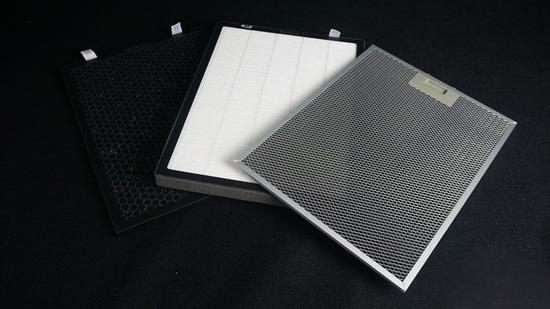
Consumers who are familiar with air purifiers surely know that the most critical component for "smog removal" in all filtration-type air purifier products is the HEPA filter, which stands for High Efficiency Particulate Air Filter. However, it is not commonly known that HEPA filters are classified into different levels. For instance, the HEPA level of LIFAair’s new LA500 purifier reaches level 12. The differences in purification capabilities among filters of varying levels directly impact their ability to filter PM2.5 particles.
Testing data indicates that the official filter products from air purifier manufacturers meet the nominal requirements for air purifiers in both key indicators. Third-party compatible filters can meet the standards for particulate clean air volume, but their formaldehyde purification performance is relatively poor. Among 20 batches of products that claim to have formaldehyde purification functions, 17 batches failed to meet the nominal requirements of the air purifier, resulting in a disqualification rate of 85%. One batch of products achieved a formaldehyde clean air volume of 3.7 m3/h, merely 2.5% of the nominal value of 150 m3/h, essentially lacking formaldehyde purification capabilities.
Xiao Jun remarked that during the testing process, it was found that the thickness and quality of third-party compatible filters varied from those of the original products, resulting in inconsistencies in filtration resistance. This led to differences in airflow speed during use compared to the original filters, causing significant instability in formaldehyde removal performance.
It has been introduced that the price differences in filters are mainly determined by the raw materials and production processes. Lower-priced filters mostly use layered structures with relatively simple production processes, while composite filters have more complex production processes and better purification effects, thus commanding higher prices. However, a filter's performance does not solely depend on its price; it is crucial that it matches the air purifier. Original filters are indeed better but are relatively expensive. If we consider 500 yuan as the dividing line for quality levels, currently, the sales volume in the market is approximately evenly split, with no significant differences between sales volumes of products across different levels.
The Hebei Provincial Environmental Protection Institute advises consumers to refer to testing data and reasonably choose filters based on their living environment, usage objects, and various usage purposes, taking into account factors such as price and purification efficiency, to avoid spending money without achieving the desired effects or paying for unnecessary features.